
Start with capacity
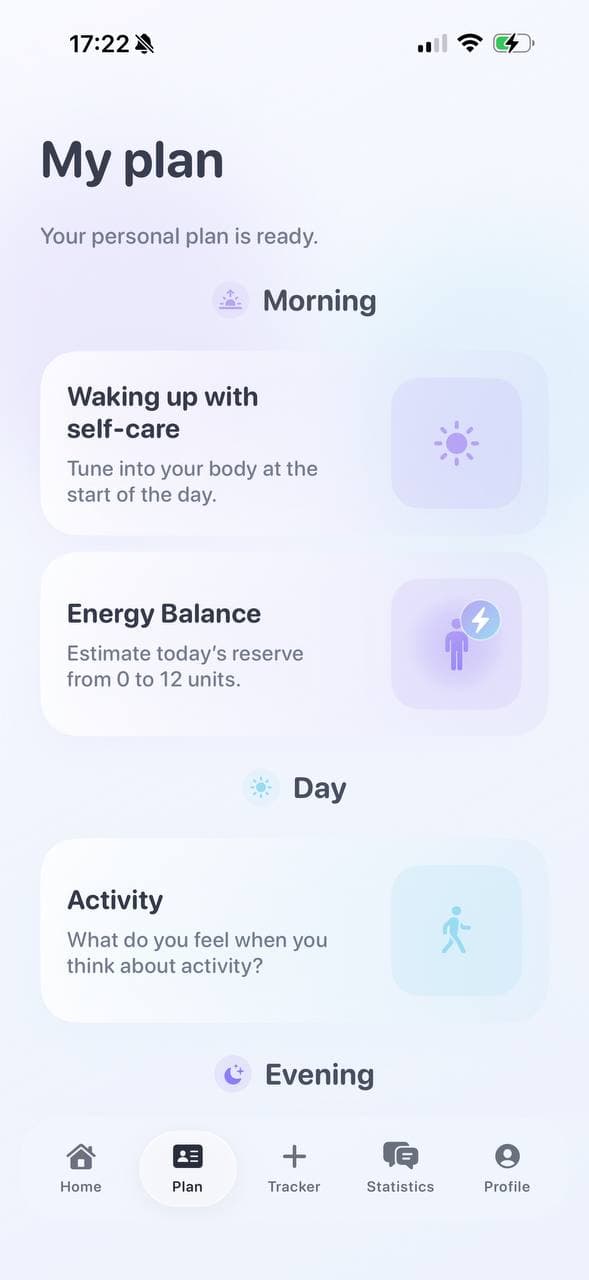
Estimate the day's reserve before choosing what to do, so plans can meet the body where it is.
Energy pacing for chronic pain
PainFlow supports pacing with gentle planning, energy check-ins, and small steps that help users keep acting without pushing through overwhelm.
PainFlow
Estimate the day's reserve before choosing what to do, so plans can meet the body where it is.
Small steps make it easier to continue living while respecting pain, fatigue, and emotional load.
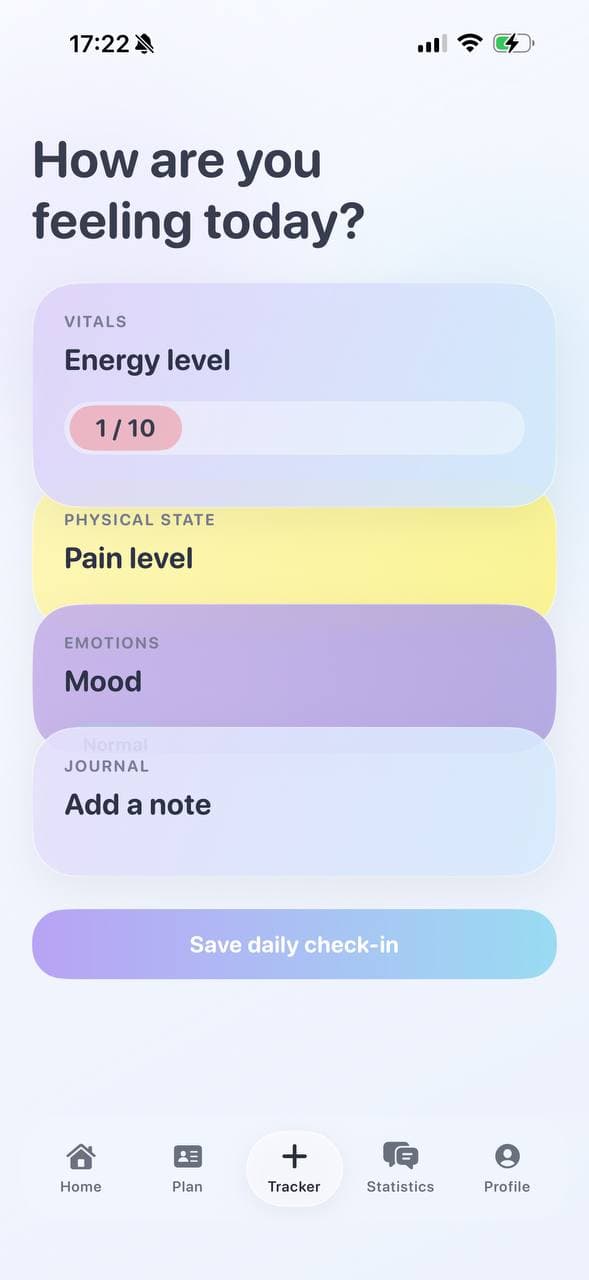
Daily check-ins help users learn what drains or restores energy over time.
Guide
Energy pacing is the practice of planning activity around capacity instead of waiting until the body is already overwhelmed. For people living with chronic pain, fatigue, or recurring flare-ups, the question is often not whether something matters. It is whether the body has enough resource for the task today, and what size of step would be realistic.
PainFlow treats pacing as a gentle daily skill. A user can start with an energy check-in, notice pain and mood, and then choose a small action that fits the current state. This can help reduce the all-or-nothing cycle: doing too much on a better day, crashing afterward, then feeling guilt for needing rest. The app supports smaller decisions before overload builds.
Pacing is not about doing less forever. It is about making action more sustainable. Some days the next step may be a short practice, a pause, or adjusting the plan. Other days it may be choosing one manageable task. PainFlow keeps this process practical and non-judgmental, so planning can respect both real life and the body's signals.
A normal planner begins with tasks. PainFlow begins with the person's pain, energy, and emotional load.
Plans can change without turning the day into failure. The app supports realistic adaptation.
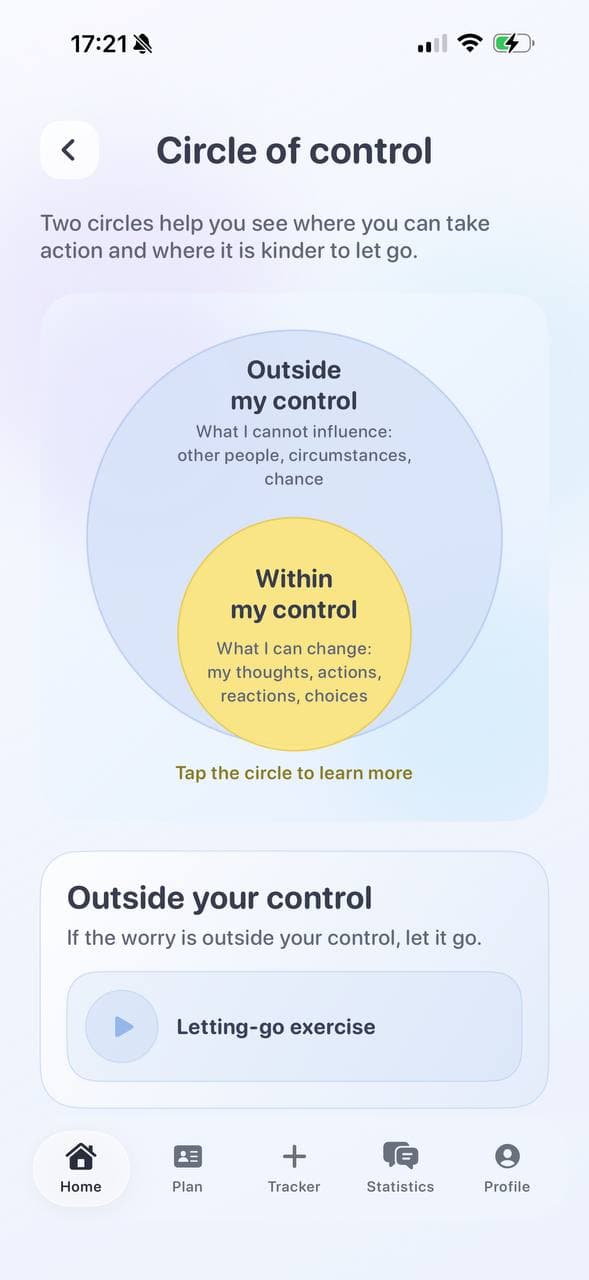
When overload is building, pacing can be paired with breathing, body awareness, and emotional support.
No. Rest can be part of pacing, but pacing is broader. It means matching activity, pauses, and expectations to the resource available today.
PainFlow cannot treat a flare-up, but pacing can help a user reduce pressure, choose smaller steps, and avoid adding unnecessary overload.
No. Pacing is about making goals more sustainable by adjusting the size and timing of actions.
PainFlow combines check-ins, daily planning, small steps, and gentle reflection so users can plan around capacity rather than pressure.
Explore related support
App and privacy
PainFlow supports self-awareness and pacing. It is not medical advice, treatment, or emergency support.