
Daily check-ins
Log pain level, energy, mood, and notes in a simple routine that can fit into difficult days.
Pain tracker app
PainFlow helps users mark pain, mood, energy, gratitude, and daily history so patterns become easier to notice and discuss.
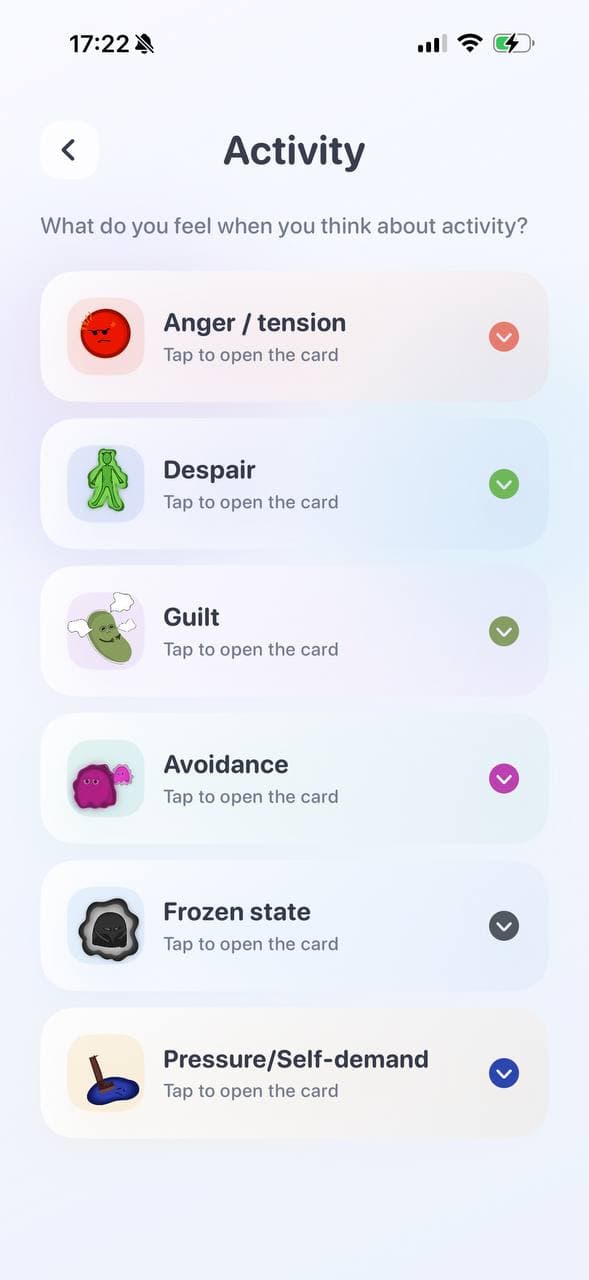
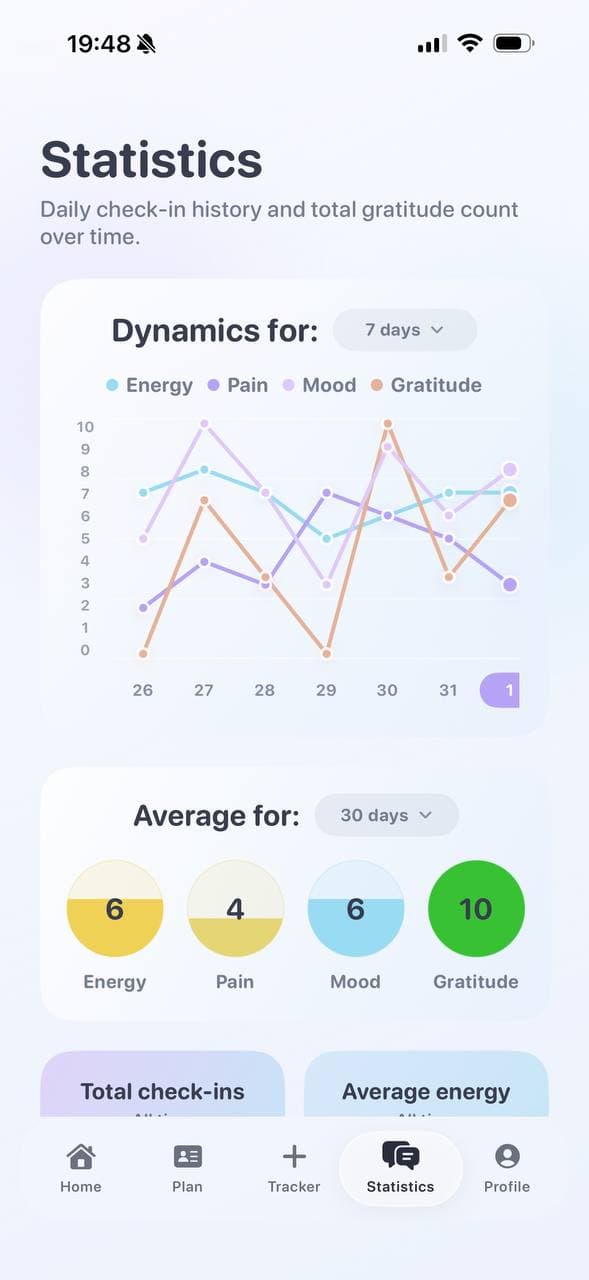
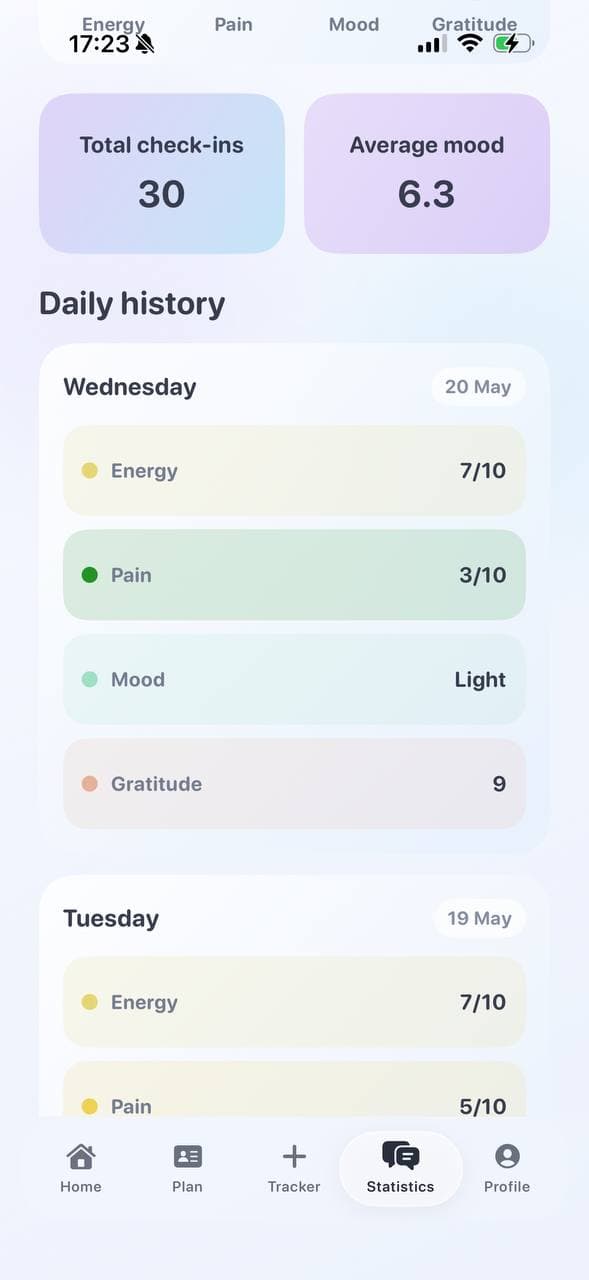
PainFlow
Log pain level, energy, mood, and notes in a simple routine that can fit into difficult days.
Statistics and daily history make changes over time easier to see without over-interpreting a single day.
Personal records can help users prepare for care conversations with clearer context and examples.
Guide
A pain tracker is most useful when it does more than ask for a number. Pain changes with energy, stress, mood, rest, movement, routines, and the demands of daily life. A single pain score can be helpful, but it rarely tells the whole story. PainFlow is built around daily check-ins that connect pain level with energy, mood, gratitude, notes, and timestamps, so the user can see a broader picture over time.
The goal of tracking in PainFlow is to notice patterns, this can help users prepare for care conversations with concrete examples instead of relying only on memory.
High pain or low energy is a need to show care for yourself.
Daily check-ins are short and clear, so they can be used even on difficult days.
The app helps users see the connection between well-being, events, and load.
The tracker is connected with practices, so after noticing patterns users can choose what they really need.
PainFlow focuses on user-entered check-ins such as pain level, energy level, mood, gratitude count, notes, and related timestamps.
PainFlow is a wellness and self-awareness tool. It does not diagnose conditions, interpret symptoms medically, or replace professional advice.
No. Regular entries can make patterns easier to see, but PainFlow is designed to be useful without pressure or perfection.
For some people, intense tracking can feel heavy. PainFlow is designed to keep entries simple and contextual, so users can track gently and stop when they need rest.
Explore related support
App and privacy
PainFlow tracks user-entered wellness information. It does not diagnose conditions or replace professional medical advice.